If you’re in the business of warehousing, distribution, or industrial storage, chances are you’re exploring ways to do more with less. Less space, less labor, less time. Automated Storage and Retrieval Systems, or AS/RS, offer a powerful solution for warehouse automation that hits all those notes.
In this guide, I’ll break down exactly what AS/RS is, the types you should know about, and how to implement and maintain these systems successfully. Whether you’re expanding operations or just looking to make your facility more efficient, this overview will get you started on the right foot.
What Is AS/RS?
Automated Storage and Retrieval Systems are technologies designed to automatically place and retrieve items within a facility. These systems are powered by a combination of mechanical components, robotics, software, and controls that reduce the need for manual labor.
Instead of forklifts navigating long aisles or employees picking items from high shelves, AS/RS systems take care of these tasks through automation. They are especially useful in high-volume environments where speed, accuracy, and space utilization are key.
Core Components of AS/RS
An AS/RS solution typically includes the following elements:
- Storage Structures: Shelving or racking designed to work with the automation system.
- Retrieval Machines: These can be cranes, shuttles, or lifts that handle product movement.
- Conveyors or Transfer Systems: Move items to and from the AS/RS.
- Control Software: Directs storage, retrieval, and inventory tracking.
- Operator Interfaces: For staff to monitor and manage the system.
Each of these elements works together to deliver a seamless, efficient storage and retrieval process.
Types of AS/RS Systems
Not all AS/RS systems are created equal. Choosing the right one depends on your facility layout, SKU profile, and operational goals. Here are the most common types:
1. Unit Load AS/RS
This type handles large loads like pallets and uses cranes or shuttles to store and retrieve pallet-sized loads in high-bay racking systems. It’s ideal for bulk storage and frequently used in manufacturing and distribution.
2. Mini Load AS/RS
Perfect for small parts, totes, bins and trays, this AS/RS utilizes smaller cranes or shuttles designed for light loads, operating in narrow aisles with high speed and accuracy. Think of it as a smaller, faster cousin to unit load systems, commonly found in parts distribution or e-commerce.
3. Vertical Lift Modules (VLMs)
VLMs are enclosed systems that store items vertically and deliver them to an ergonomic access point. These are great for high-density storage of small to medium-sized items, often used in manufacturing and medical facilities. VLMs optimize floor space while maintaining picking speed and safety.
4. Vertical and Horizontal Carousels
Carousels are rotating shelves that move vertically or horizontally to deliver items to the operator. Carousels are suitable for environments with limited floor space and high-frequency access needs.
5. Pallet Shuttle Systems
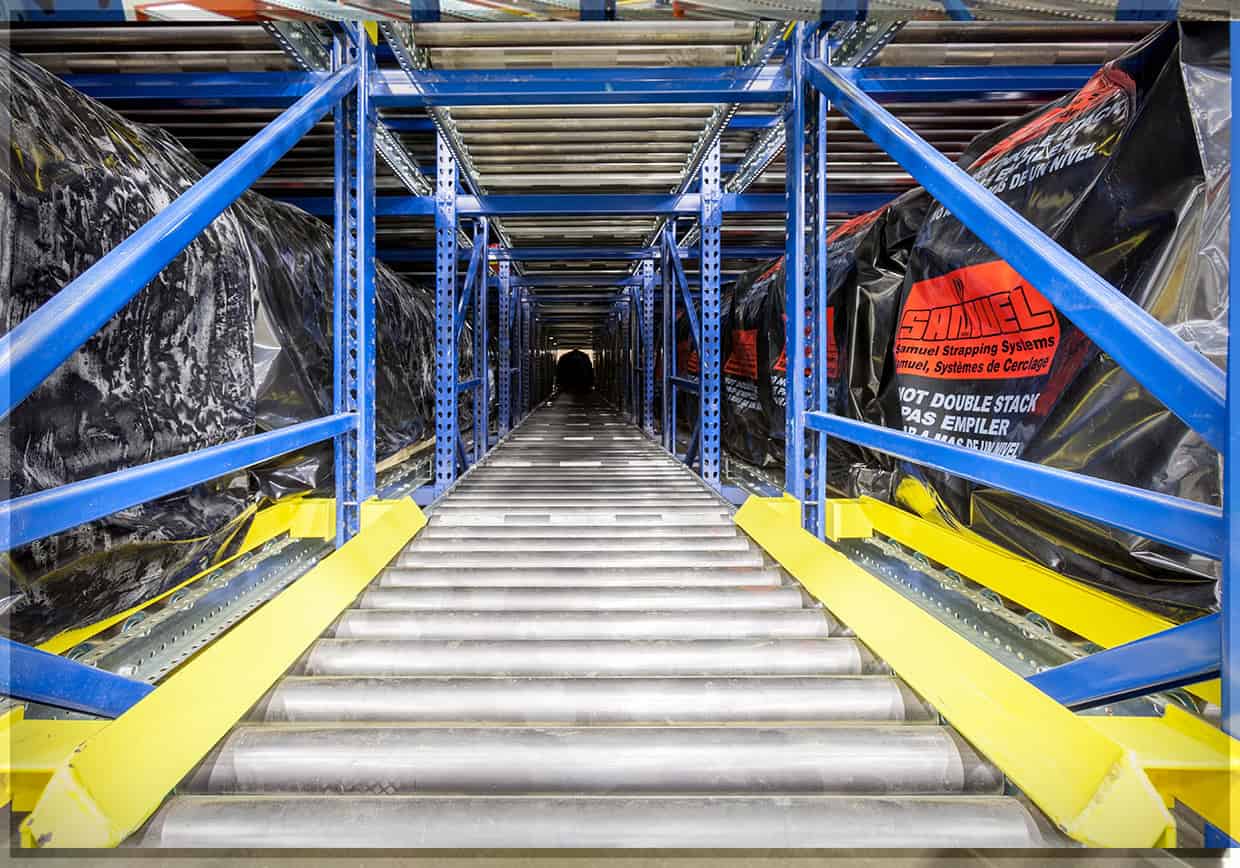
These systems use shuttles to store and retrieve pallets within deep racking systems. A high-density option that eliminates the need for forklift aisles. Each of these systems brings its own strengths, and in many cases, hybrid systems combine several types for tailored performance.
6. Cube-Based Storage
Cube-based storage maximizes space by storing bins in a cube grid, with robots retrieving items from above. Robots travel across the top of the storage grid to access bins and deliver them to picking stations. Excellent for e-commerce and retail where dense storage and high pick speed are essential.
7. Robotic Picking Systems
These systems combines AS/RS with robotic arms for picking items directly from storage. Robots retrieve items autonomously from bins or shelves and place them into order containers. Used in advanced fulfillment centers, reducing labor needs and improving accuracy.
Top Benefits of AS/RS
Let’s get to the good stuff. Why should you invest in AS/RS? Here are the most valuable benefits:
1. Space Utilization
AS/RS allows you to build upward instead of outward. By maximizing vertical space and eliminating wide forklift aisles, you can often double or triple storage capacity without moving to a larger facility.
2. Labor Efficiency
Automated systems take over repetitive, time-consuming tasks. This not only reduces labor costs but also frees your team to focus on higher-value work. In a tight labor market, this can be a game-changer.
3. Accuracy and Inventory Control
Fewer human touches mean fewer errors. With software tracking every move, your inventory data becomes more accurate and reliable.
4. Improved Safety
By reducing the need for forklifts and ladders, AS/RS systems lower the risk of workplace injuries. They also create a more orderly, controlled environment.
5. Scalability
As your business grows, AS/RS systems can be expanded or reconfigured to meet new demands. They’re designed with adaptability in mind.
What to Consider Before Implementation
Implementing AS/RS is not a plug-and-play process. It requires planning, analysis, and a strategic mindset. Here are the key considerations:
1. Inventory Analysis
Evaluate the types, sizes, and turnover rates of your inventory. High-SKU environments may benefit from mini-load or carousel systems, while pallet-heavy operations might lean toward shuttle or unit-load systems.
2. Facility Layout
Your existing footprint will play a big role. Do you have ceiling height to work with? Is your building conducive to vertical systems?
3. Integration Needs
How will AS/RS tie into your current warehouse management system (WMS) or ERP software? Seamless integration is essential for real-time tracking and efficient operation.
4. ROI Calculations
Yes, AS/RS can be a significant investment. But calculating your return in terms of space saved, labor reduced, and inventory accuracy gained can help build a compelling case for implementation.
5. Partner Selection
Choose a partner with experience, flexibility, and the ability to offer custom solutions. Sync Storage Solutions, for example, handles everything from design to final installation and ongoing service.
Best Practices for AS/RS Maintenance
Just like any high-performance machine, AS/RS systems need regular care to stay efficient and reliable. Here’s how to keep things running smoothly:
1. Preventive Maintenance
Schedule regular checks on motors, sensors, and control systems. Preventive maintenance minimizes unplanned downtime.
2. Software Updates
Keep your control software and system firmware up to date. Updates often include performance improvements and security enhancements.
3. Staff Training
Even automated systems require human oversight. Make sure your team is trained on daily operation, troubleshooting, and safety protocols.
4. Service Contracts
Consider working with a maintenance partner for ongoing support. Sync Storage Solutions offers tailored service plans that help extend equipment lifespan and performance.
Final Thoughts
Warehouse automation is no longer just a nice-to-have. It’s a competitive edge, and Automated Storage and Retrieval Systems are leading the charge. From increasing space efficiency to reducing labor and improving accuracy, AS/RS systems deliver real, measurable value.
If you’re ready to explore how AS/RS can fit into your operation, let’s talk. Sync Storage Solutions is here to design a customized solution that supports your goals today and scales with you tomorrow.