If your warehouse is constantly moving product in and out, managing inventory turnover quickly and efficiently isn’t just a goal—it’s a necessity. That’s where pallet flow racking comes into play. This high-density storage system is designed to keep operations moving, inventory accurate, and space fully utilized. But is it the right fit for your facility?
In this article, we’ll explore how pallet flow racking works, its ideal applications, and the key benefits that make it a smart investment for many fast-paced operations.
What Is Pallet Flow Racking?
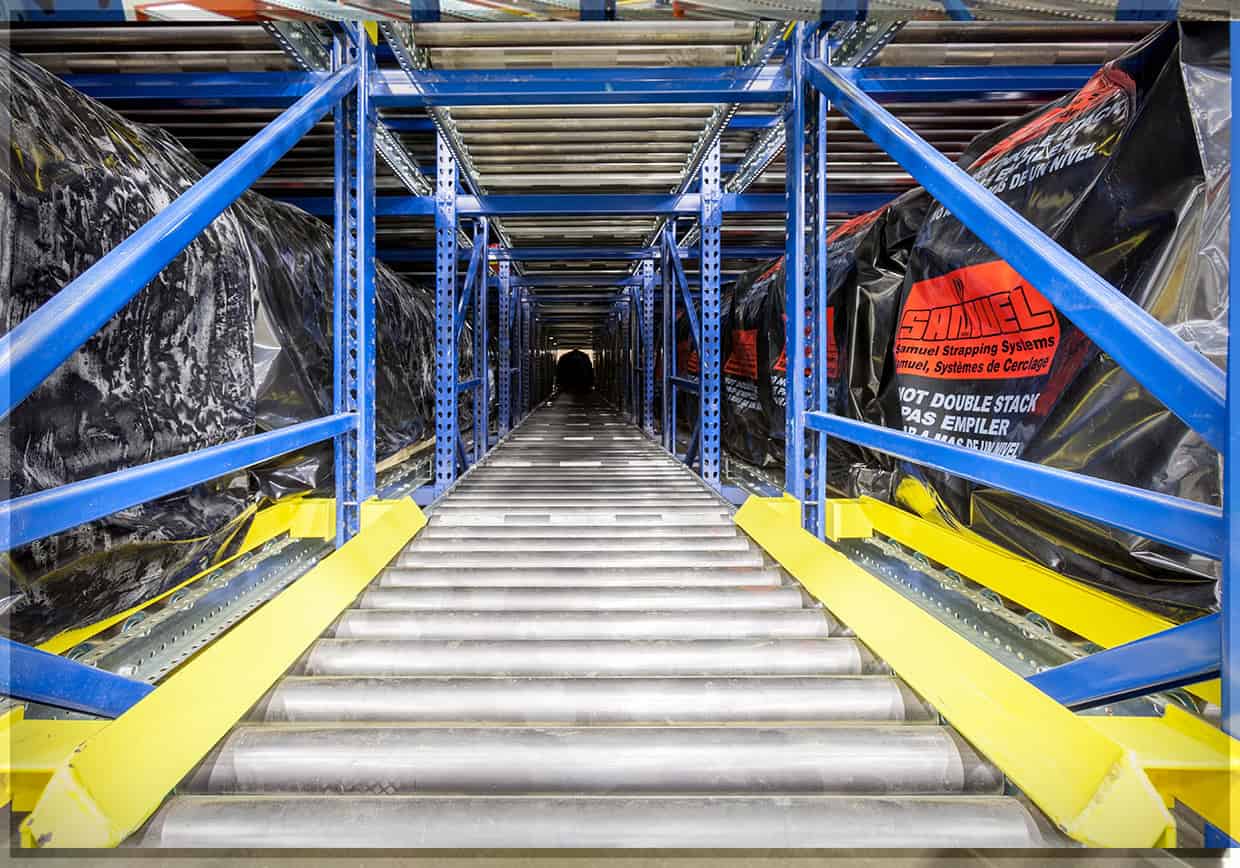
Pallet flow racking, also known as gravity flow racking, uses slightly inclined roller lanes to move pallets from the loading side (rear) to the picking side (front). Once a pallet is loaded onto the system, gravity does the rest—moving it forward automatically as space becomes available.
Unlike traditional pallet racking that relies on forklifts navigating in and out of aisles, pallet flow systems streamline the entire process. Your team can load inventory on one side and pick from the other, minimizing forklift travel and improving workflow.
How Does It Work?
Each lane in a pallet flow rack is equipped with rollers set at a slight pitch. When a pallet is placed at the load end, it rolls down toward the pick face. As pallets are removed from the front, the next in line automatically advances.
Here’s a quick breakdown of the flow:
- Load Product: Pallets are placed at the rear of the rack.
- Gravity Moves Pallets Forward: The rollers allow each pallet to move smoothly to the front.
- Pick from the Front: Operators retrieve product from the pick face.
- Repeat: The next pallet rolls into position automatically.
This setup enables First-In, First-Out (FIFO) inventory control—a must for industries dealing with perishable or date-sensitive goods.
The FIFO Advantage
For operations that rely on FIFO inventory practices, pallet flow racking is a game changer. Unlike pushback or drive-in systems that follow Last-In, First-Out (LIFO), pallet flow ensures that the oldest inventory is picked first.
This matters most for businesses handling:
- Food and beverage products
- Pharmaceuticals or chemicals with expiration dates
- Seasonal goods or promotional items
- Any time-sensitive inventory
Maintaining FIFO with minimal effort reduces waste, improves order accuracy, and keeps your inventory rotation on track without daily micromanagement.
Is It Right for High Turnover?
In short—yes. Pallet flow racking thrives in environments where products move fast and inventory turnover is high.
You’ll find it commonly used in:
- Distribution centers
- Grocery fulfillment
- Beverage warehouses
- Cold storage facilities
- Manufacturing supply areas
It works best when each lane is dedicated to the same SKU, simplifying tracking and movement. And because the racking system handles most of the motion, your forklift operators can focus on what they do best—quickly loading and unloading.
How Fast Can It Really Be?
Let’s talk about speed. Traditional pallet racking can slow things down as forklifts travel deeper into aisles to load or retrieve pallets. With pallet flow racking, the aisles are one-way. That means forklifts load from the back and pick from the front, reducing travel time and potential bottlenecks.
The result? A smoother, safer, and faster workflow. Facilities can handle more pallets per hour, reduce downtime, and maximize labor efficiency. And in today’s warehouse world, that’s a serious competitive edge.
Cost-Benefit Analysis
You might be wondering, “Is it worth the investment?” The answer depends on your operation, but in many cases, the answer is yes—especially over the long haul.
Initial Costs
Pallet flow racking systems tend to cost more upfront than selective pallet racks. That’s due to the added components like rollers, brakes, and reinforced frames. However, it’s important to look beyond just initial expenses.
Long-Term ROI
Here’s what you gain:
- Increased storage density: More pallets stored per square foot.
- Reduced labor costs: Fewer forklift movements and quicker access to inventory.
- Improved accuracy: FIFO makes tracking and inventory rotation simpler.
- Lower product loss: Better control of perishables and date-sensitive items.
Over time, these benefits often outweigh the initial cost, especially for high-turnover operations where speed and accuracy directly impact profitability.
When Pallet Flow Isn’t the Right Fit
As great as pallet flow racking is, it’s not one-size-fits-all. If your operation frequently deals with mixed pallets or slow-moving SKUs, other systems like selective pallet racks or pushback racking may be a better choice.
Here are a few signs pallet flow may not be the best fit:
- You need flexible storage for many SKUs per lane.
- You don’t follow FIFO practices.
- Your inventory turnover is low.
That said, many facilities benefit from a hybrid storage design—combining pallet flow with selective, pushback, or drive-in systems to get the best of all worlds.
Sync Storage Can Help You Decide
At Sync Storage Solutions, we don’t believe in one-size-fits-all answers. Our team specializes in designing customized storage systems based on your unique workflow, products, and growth goals.
We’ll work with you to assess your:
- Inventory turnover rate
- Product types and shelf life
- Available floor space and ceiling height
- Material handling equipment
Then we’ll recommend a racking solution—whether that’s pallet flow, selective racks, or a combination—that gives you the best return on your investment and streamlines operations from day one.
Final Thoughts
If your facility deals with fast-moving inventory and needs reliable FIFO control, pallet flow racking might just be your new best friend. It’s fast, efficient, and built to keep your operation ahead of the curve.
Ready to explore your options? Let’s talk. We’ll help you decide if pallet flow is the right move and design a system that works for your business, not just the brochure.